
Interview with Tomi Nishiyama, head priest of Daitaiji Temple, Nachikatsuura, Wakayama
Originally published in Japanese · Translated into English by PlanetDAO
In Nachikatsuura, Wakayama Prefecture—at the foot of the UNESCO World Heritage Kumano Kodo pilgrimage trails—a small rural temple called Daitaiji has become the stage for an unprecedented experiment: connecting Japan’s vacant temples with co-owners from 23 countries around the world.
Driving the project are two of Gaiax Inc.’s portfolio companies: PlanetDAO, which uses Japan’s first joint-stock-company DAO structure to enable fractional investment into historic buildings, and Otera Stay, which operates lodging at Daitaiji. PlanetDAO was originally born inside Gaiax and spun out as an independent company through Gaiax’s “Carve-Out Option” program. Its founder, Tamaki Nishimura, began her career at Gaiax as a student intern.
The person carrying the project forward on the ground is Tomi Nishiyama, head priest of Daitaiji. We spoke with him about the on-the-ground reality of vanishing rural temples—and how the DAO mechanism is beginning to change it.
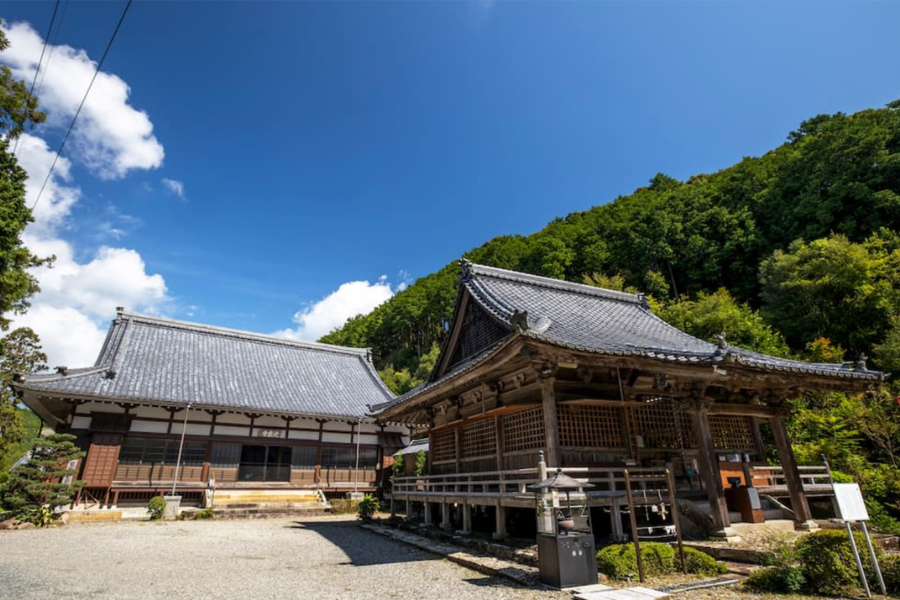
Becoming a priest, returning to a temple in ruins
Nishiyama became head priest of Daitaiji in 2016. Until then, he had been an English teacher in Tokyo.
“My family’s home temple is right next door, and both my grandfather and father served part-time. I always thought I’d take it on someday while continuing to teach—but the shortage of priests grew worse than anyone expected. Daitaiji had no resident priest, and I was asked to step in ‘just until the next person can be found.’ That’s how it began.”
When he returned, the state of the temple was bleak.
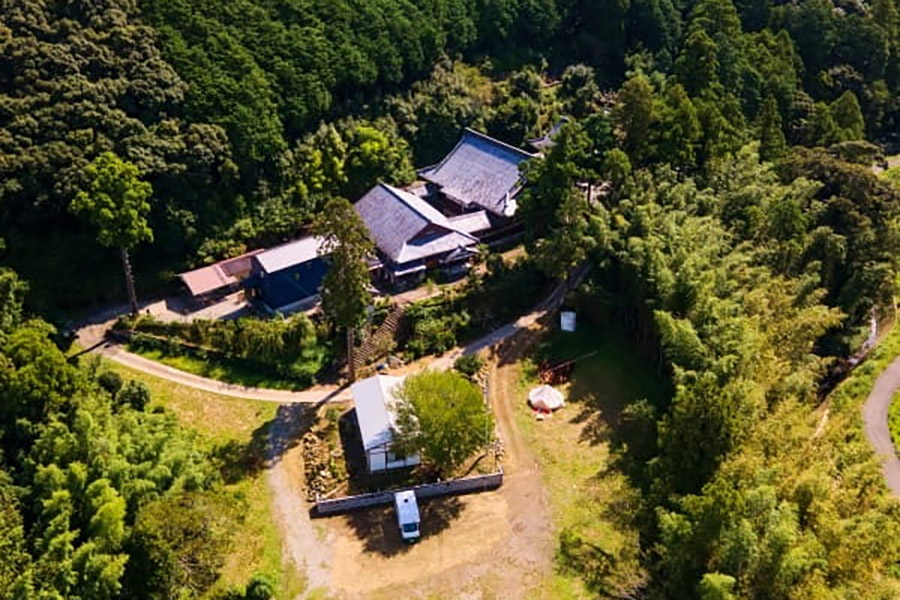
“Parts of the walls had collapsed. The grounds had become a bamboo thicket. At night, 20 to 30 deer would run around the garden. The number of danka (parishioner households) had fallen, donations had dried up. Just keeping the temple standing meant repair costs in the millions, sometimes tens of millions of yen. All I had was the certainty that, at this rate, it would not survive.”
“Cultural properties accumulate losses simply by being left alone”
Nishiyama’s decision to pivot into lodging and camping was driven by a desire to turn the temple’s liabilities into assets.
“Temples hold precious cultural properties and large stretches of forest, but those things can become liabilities that consume enormous sums simply to maintain. A 10-hectare mountain forest, for example, can become a burden—if it isn’t managed, a typhoon brings down trees, and neighbors complain. From a management standpoint, it’s pure loss.
So we decided to give the temple new value as lodging—a shukubo—and as a campground. By turning the temple into shukubo, the cultural property becomes something worth visiting and staying in. You can sleep inside a cultural property; staying allows you to experience it slowly. Lodging adds new value. And if lodging revenue can be channeled into repair costs for the cultural property, sustainability comes into reach.
Cutting trees in the forest merely for upkeep is a cost. But if those logs become firewood for campers or for outdoor saunas, the trees turn into income. An unexpected bonus: once people started camping and staying in the garden, the deer stopped coming—they avoid places with humans.
Mountains. Cultural properties. Looked at differently, these are the very charms that rural temples have and urban temples don’t. The fact that there are people who actively seek out these things is, I believe, the reason temples like ours deserve to be preserved.”
Today, Daitaiji’s lodging operation is run under the name “Temple Hotel Daitaiji” by Otera Stay, a Gaiax-backed temple-lodging service Nishiyama brought in as a business partner.
——-
Related PlanetDAO Projects with Nishiyama-san
Nishiyama-san is also involved in the operation and revitalization of the following PlanetDAO projects in Wakayama: