
By Tamaki Nishimura
First published on PlanetDAO Substack on October 6, 2026.
I was recently interviewed for a series in a Japanese magazine. We talked about PlanetDAO, how I got here, and where I hope it goes. Somewhere in the middle of answering, I caught myself thinking, oh, so that’s why I do this. I wanted to write it down in my own words.
PlanetDAO brings together money and people from around the world to preserve and revive Japan’s cultural heritage: temples, old houses (kominka), and historic residences that local communities and owners can no longer keep alive on their own. Instead of letting these places go, we hold them together and pass them on. Right now, five projects are either fully funded or raising, and another three or four are in preparation.
The high schooler who wanted to be a diplomat
In high school, I wanted to be a diplomat. I wanted a job that carried Japan’s charm to the world and connected Japan with other countries. But I was never quite the straight-A, elite-university type, so it stayed a dream.
It started with a year abroad as an exchange student. Whenever I spoke, people saw me first as “the Japanese person.” For the first time, I understood that this was where I stood. I’m not a returnee kid; my time overseas was about ten months. Maybe because my roots stayed so firmly in Japan, my feelings pointed less toward “I want to go out into the world” and more toward “I want the world to know how wonderful Japan is.”
I went to university in Kyoto. In my second year, I joined an internship at Gaiax, a Tokyo tech company, and happened to meet someone running an inbound travel business. It was so interesting that I took a year off and moved to Tokyo. Even after I went back to school, they let me lead the business. For a while I commuted between Kyoto and Tokyo by overnight bus: classes packed into Mondays and Tuesdays, work in Tokyo through the weekend.
We ran tours for visitors to Japan: bar-hopping and walking tours, cycling tours, and deeper experiences like making tofu from scratch at a shop that had been in business for centuries. Some days I guided a walking tour in the morning, a cycling tour in the afternoon, and a bar-hopping tour at night.
I got to witness, again and again, the exact moment someone fell in love with Japan. That is where all of this began.
Covid, motherhood, and a temple in Wakayama
Covid arrived the year I graduated. Just as I was ready to go all in, the travelers disappeared, and we had to close the inbound business.
In that same stretch, with no work to do, I had my first child. Was it planned, or did it just happen? Honestly, I still can’t tell. I helped with other projects inside Gaiax while raising a baby, quietly shaping the idea for what I do now. After my second child was born, I started the company. Today I have three children.
This was when NFTs and DAOs were taking off. In Japan, a temple has its danka, the local families who support it for generations. A village has its residents. Mutual support exists, but inside fixed circles. A DAO is different: anyone who cares can join. I wondered if that structure could let people all over the world who want to do something for Japan help solve Japan’s problems.
Around then, I visited a temple in Wakayama on a company workation. The head priest there was also looking after seven other temples that no longer had a resident priest of their own. He simply couldn’t keep them all going alone. Being supported by people from around the world was a challenge he wanted to try, too. We hit it off, and his temple became PlanetDAO’s first project.
Finance and real estate are not things you learn alone. This was built by listening to a lot of people.
Not an investment for getting rich
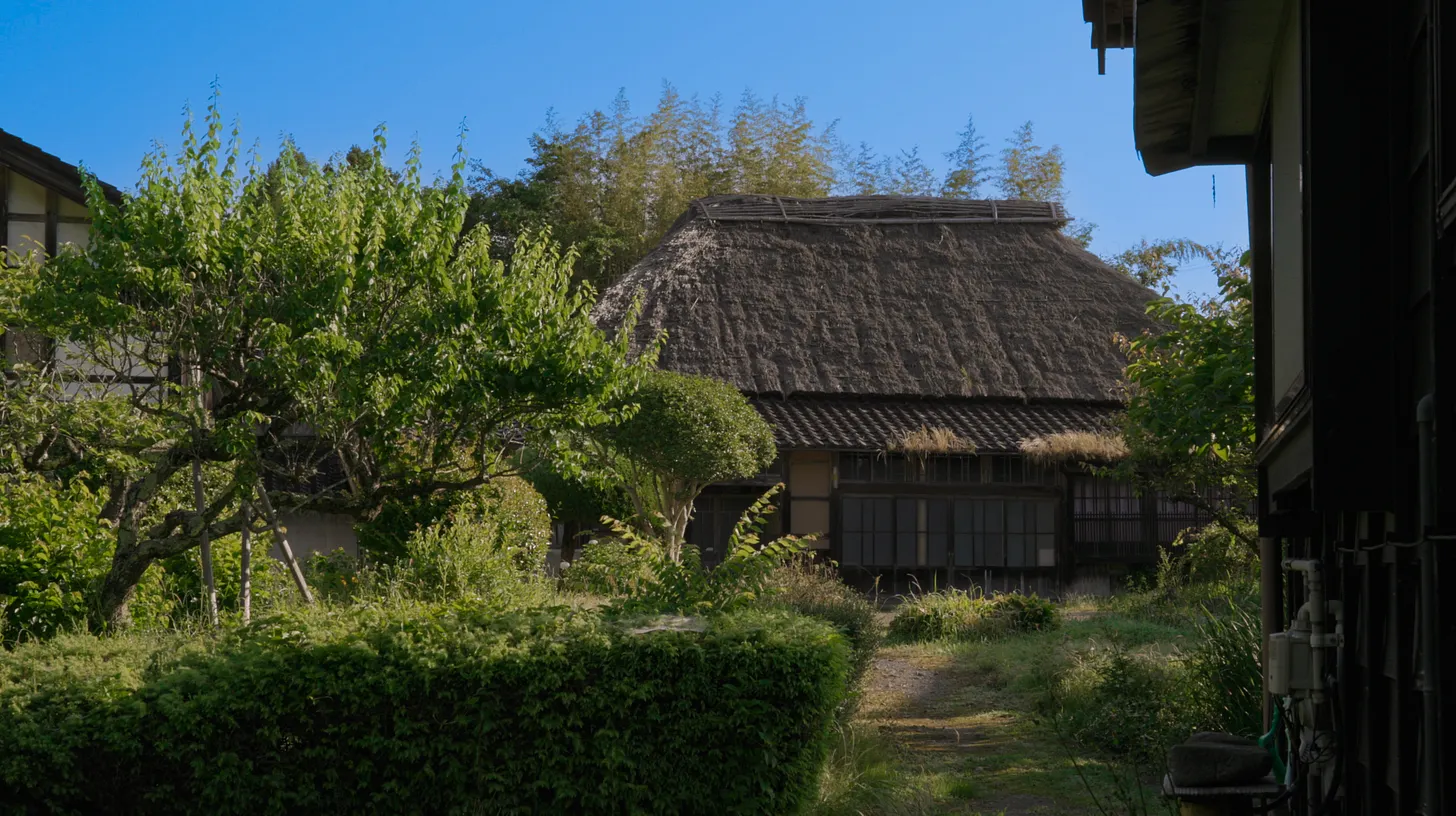
Here’s how it works. Ownership of a building moves to a newly formed company, and that company raises investment from around the world. The money goes into repairs, and the building is brought back to life with a local partner, often as a place to stay. Our role is to gather the people and the capital and judge whether a project can stand on its own. Day-to-day operation and branding are handled by a local partner, usually someone already running accomodations in the area.
The minimum investment is ¥500,000, a few thousand US dollars. That’s not crowdfunding money. Legally it’s a security, but honestly, it is not a great product for anyone who just wants to make money.
About 40% of our investors are in Japan. Next come the US and Singapore, followed by Thailand, Australia, the Philippines, Hong Kong, and Taiwan. They love Japan, and more than that, they want to do something. Many already invest in stocks or property and want to put a small slice into something they can learn from. One investor called it “creative investment.” They enjoy seeing a region actually change because of their money, and getting involved in a temple’s company is not something most people ever get to do in life.
Every month we send investors a newsletter: how construction is going, what the community is struggling with, where help is needed.
Paying your own airfare to pull weeds
Our investors don’t just send money. They show up. None of it is hospitality; it’s a chance to stand alongside the people who live there. There are three ways they do it.
Stayovers: sleeping in the house before we touch it
Before renovation begins, investors stay overnight in the property and talk through the design and the guest experience with the architect. You can’t understand a house at night unless you’re there at night, so everyone brings a sleeping bag.
This May, we stayed in the Hojo Heritage on Sado Island, a roughly 200-year-old house whose family practiced traditional herbal medicine for generations. We asked ourselves: would a guest who stays here actually be happy? The answer that emerged surprised me. If we renovated it, it would become one more polished old house, like the ones you can already find in Kyoto or Kurashiki. What makes this place special is the Hojo Heritage’s history as herbal doctors, and guests should be able to feel that. So the group concluded to repair the house rather than renovate it.
Meetups: joining in local life
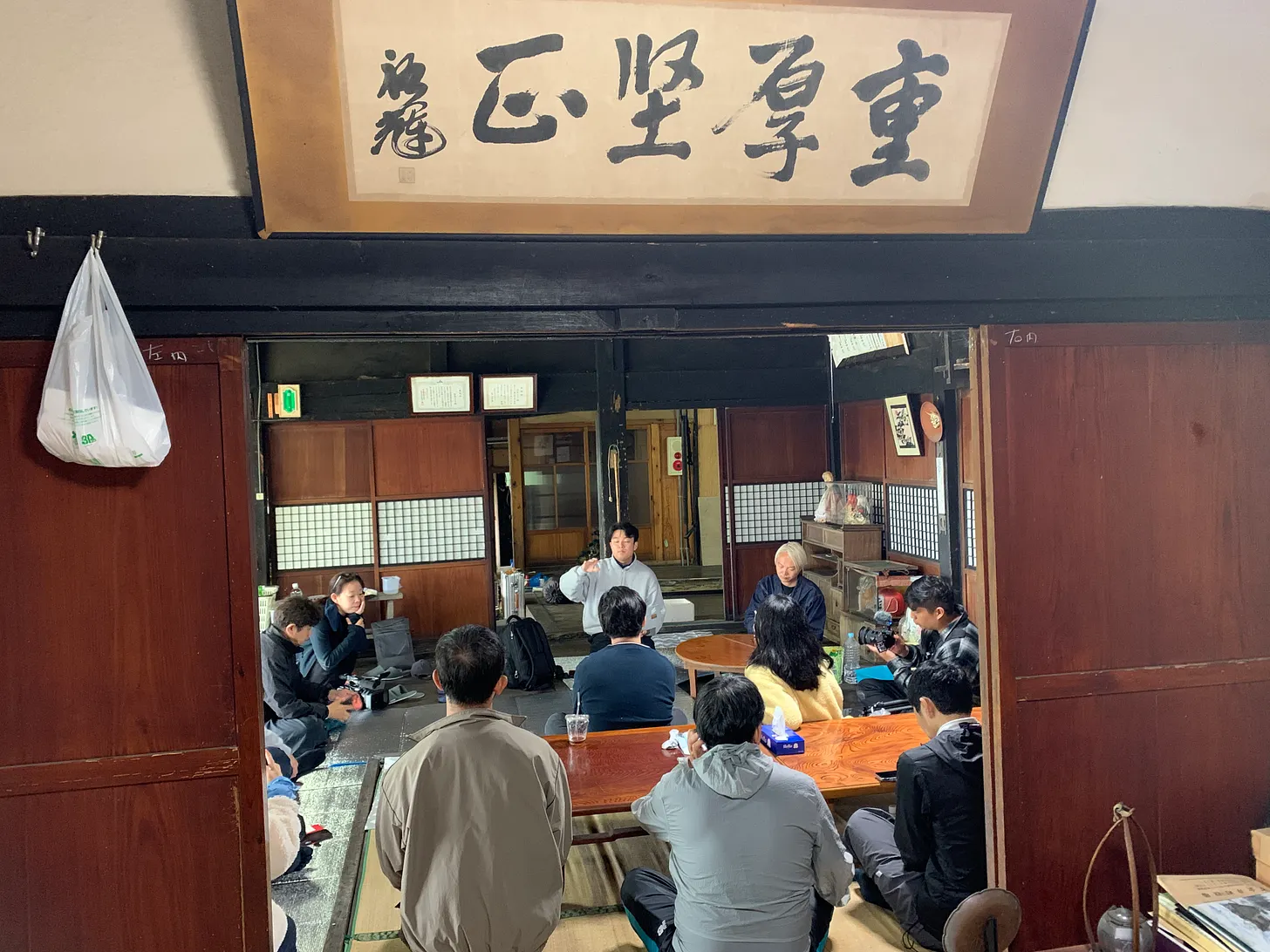
Once or twice a year, we hold a meetup timed to a local festival or community event. The point is to get to know each other, and to understand the area from the inside, the way the people who live there experience it. In December, about 40 people are coming, almost all from overseas, paying their own airfare. The destination isn’t Kyoto or Takayama. It’s about five hours from Tokyo, and five from Osaka. There are far more people than I imagined who want a reason to go somewhere an ordinary trip would never take them.
Community work: rolling up our sleeves
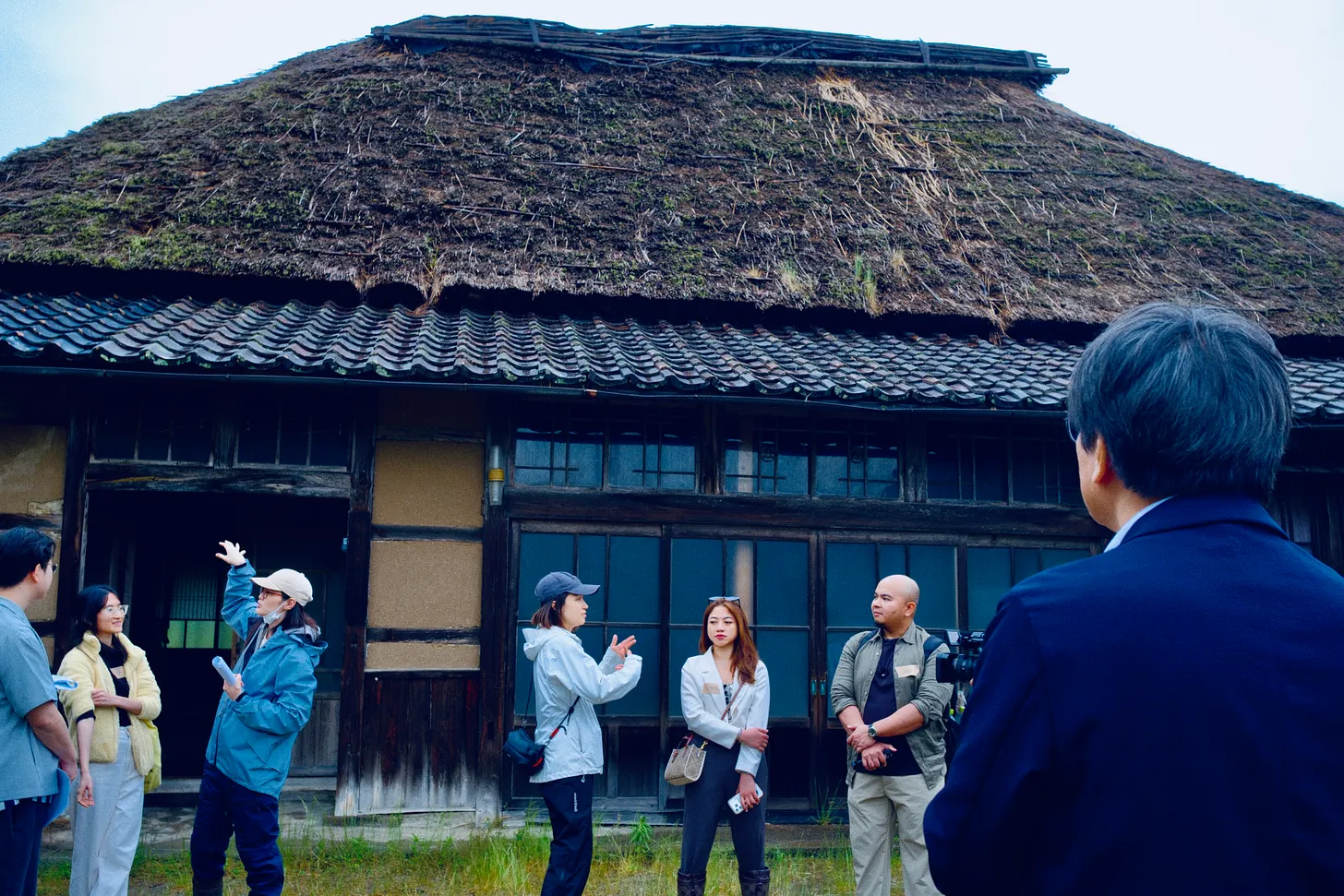
Investors also come to help with whatever the community needs. Weeding, for example, is a real burden for an aging village, so we do it together.
One story I’ll never forget: at the Wakayama temple, one participant was an architect from Hong Kong who designed commercial buildings. Here at PlanetDAO, everything was decided from zero, and she was captivated. She stayed for about three weeks at the PlanetDAO temple. Then she announced she would build a Zen garden beside the temple herself.
The temple sits at the top of a long stone staircase. She carried pebbles up from the river, again and again. She didn’t speak Japanese. Watching her, the locals started carrying stones with her.
An investor treating a place as truly their own, and drawing the community in with them: that moment may be the thing I care about most at PlanetDAO.
When it stops being about money
The hardest part is building trust with the local community. When a key person says, “I’m doing this with them, so follow me,” things move. When that person loses heart, or grows wary of us, everything stalls.
The first reaction is almost always, “Is this really okay?” Local leaders who have carried their community’s problems as their own often tell us there’s no better solution. Everyone else waits and watches. That’s why I feel a heavy responsibility to make each project succeed, so it becomes everyone’s own.
The buildings are given to us for free. For the former owners and the community, it’s like handing over a family treasure. Legally there may be no issue, but whether they can let it go with a good feeling is another matter. That’s when I feel, deeply, that this isn’t a world of money.
Japan has about 75,000 temples, and roughly a third are said to have no resident priest. That’s only what has been counted; the real number is surely higher. The family on Sado had offered for years to donate their house, and were told the upkeep couldn’t be covered. Simply protecting these places isn’t enough. They need to be used.
I also feel this is the last chance. Even at temples without a priest, local people have polished the tatami mats and saved little by little for repairs, so they are still beautiful. Come back in ten years, after those people are gone, and the buildings will likely be in ruins.
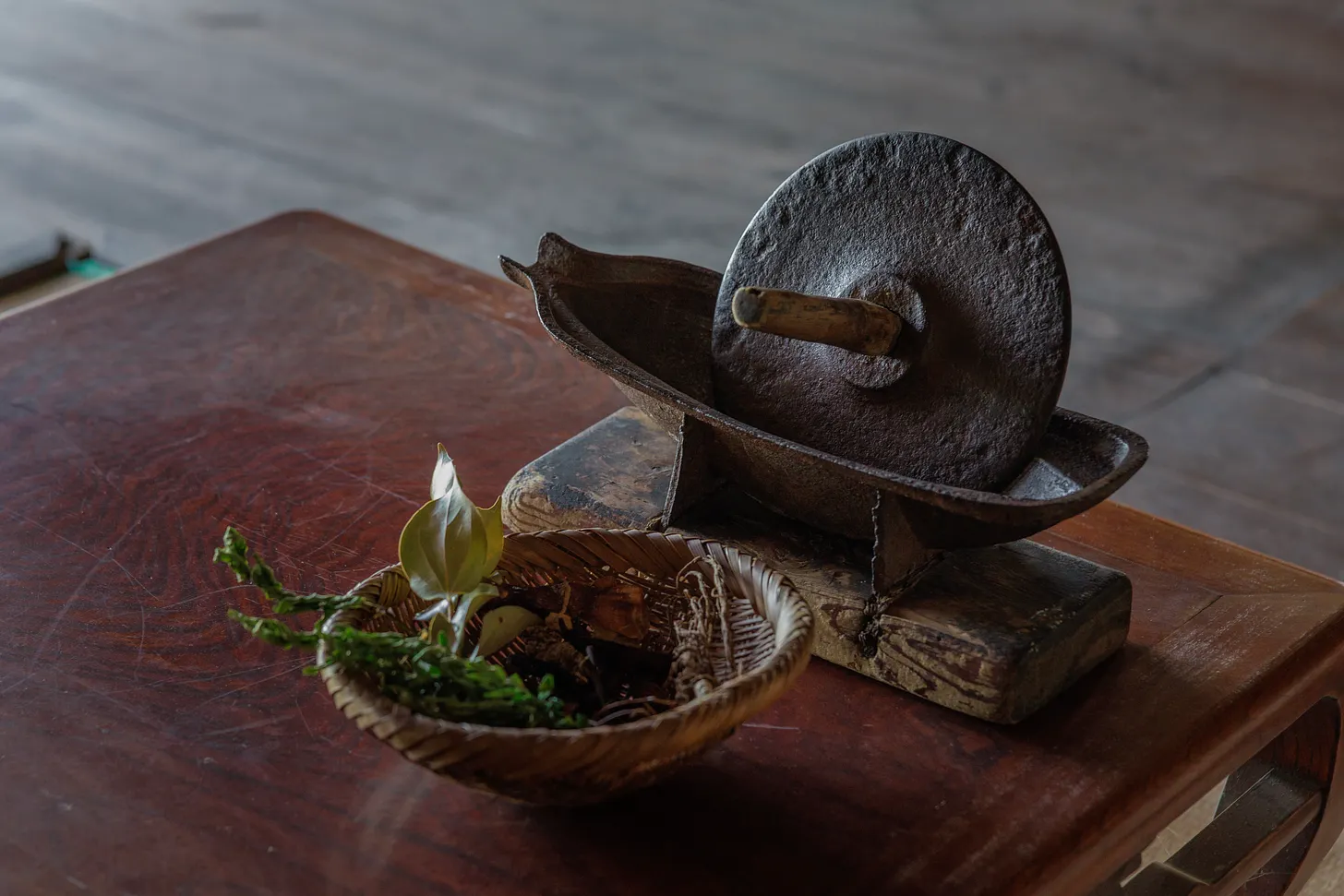
We don’t strip a building and renovate it into something new. We repair it, and keep the life that was lived there. The Sado house was used for medicine made from wild herbs. We found an old chest of drawers with mysterious labels, and when we decoded them, the numbering turned out to follow a hidden system. Discoveries like that are everywhere. The way people lived is written into the buildings themselves.
A National Trust for Japan, built with the world
Going forward, we want to launch about three new projects a year, and move from “one building, one project” to whole areas. The places we work are places people have to choose to travel to. So beyond somewhere to sleep, an area needs somewhere to eat, things to experience, and several places to stay. I want to build those areas with partners we’ve already earned trust with.
Our model is the UK’s National Trust, which has protected historic houses and landscapes for over a century with money raised from the public rather than government subsidies. I want to do that for Japan, not only with Japanese people, but with people all over the world. Raise money, repair, bring places back to use, and keep that cycle turning.
The goal I set at the start was to steward ¥10 billion and put it to work for cultural heritage. Today we’re at ¥200 million, with about 300 shareholders. We have a long way to go.
People sometimes ask why we’re not a nonprofit. But being a business is something I don’t want to compromise on. What matters most is that this stands on its own and can keep going.
As for the name: a planet belongs to no one, yet everyone can use it. That’s what “Planet” means to us.
Why I do this
When the interviewer asked what drives me, I had to stop and think. Honestly, it’s closer to a sense of duty. I’ve seen what’s happening, and I can’t look away. It’s fascinating, and it can’t be left alone. That is what keeps me moving.
The other reason is my children. Once my life stopped being only mine, I started thinking about the world they’ll grow up into. There’s plenty of gloomy news about Japan, like the weak yen. But visitors I met over the years kept telling me the same thing: it’s rare to find a country with such a long, unbroken history, one that was never colonized. Protecting that is something we can only do now.
I’m sure there are many people, around the world and in Japan, who want to protect this country. There just hasn’t been a way to connect them. I think that’s what I want to be: the connector. A
private-sector version of the diplomat I once dreamed of becoming.
There are many ways to get involved with PlanetDAO. Join a meetup. Or bring your own skills. Once, after we posted about an herbal medicine project on Sado, a pharmacist in Okinawa reached out to say she wanted to help. Hearing “here’s what I can do” from people means the world to me.
With the right timing, the right building, and the right local partner, we’ll go anywhere in Japan. If any of this speaks to you, I’d love to hear from you.