
In the late May 2026, PlanetDAO held a stayover gathering at the Hojo Heritage in Sado.
More than 20 people joined us, including co-owners from Japan and overseas, members of the Hojo family, the local partner, and the architect working on the project.
Some participants traveled from the Philippines, Singapore, Taiwan, and the United States, booking flights and making their way to Sado Island especially for this occasion.
What Is a Stayover?
After an investment round has been completed, but before restoration work begins, PlanetDAO brings co-owners and project partners together to spend time at the property itself.
We stay inside the building, walk around the surrounding area, and speak with people from the local community. By actually staying overnight, we begin to notice things that cannot be understood from floor plans and documents alone.
What makes this place special?
What should we preserve?
What kind of experience should future guests have here?
Rather than simply visiting the finished property once the work is complete, co-owners gather on-site at an earlier stage and think about its future together. This is what a PlanetDAO stayover is about.
We have previously held similar gatherings at a temple in Nachikatsuura for our 001 project, and at a kominka house in Hayama for our 002 project.
Day One: Discovering the History of the Hojo Heritage
On the first day, we gathered at the Hojo Heritage and began with introductions.
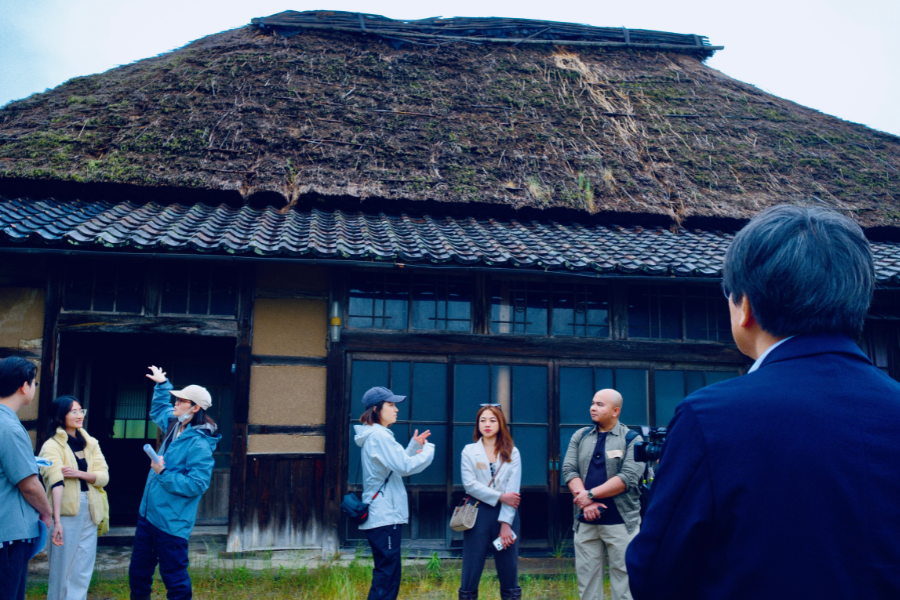 Photo Credits: Massa Takamoto
Some participants came on their own, while others visited Sado with their families. Each person shared what they were looking forward to and how they hoped to become involved with the property.
The Hojo family then guided us through the residence. Ishida-san from SIA, the architect working on the project, also explained the current plans for restoring and bringing the property back into use.
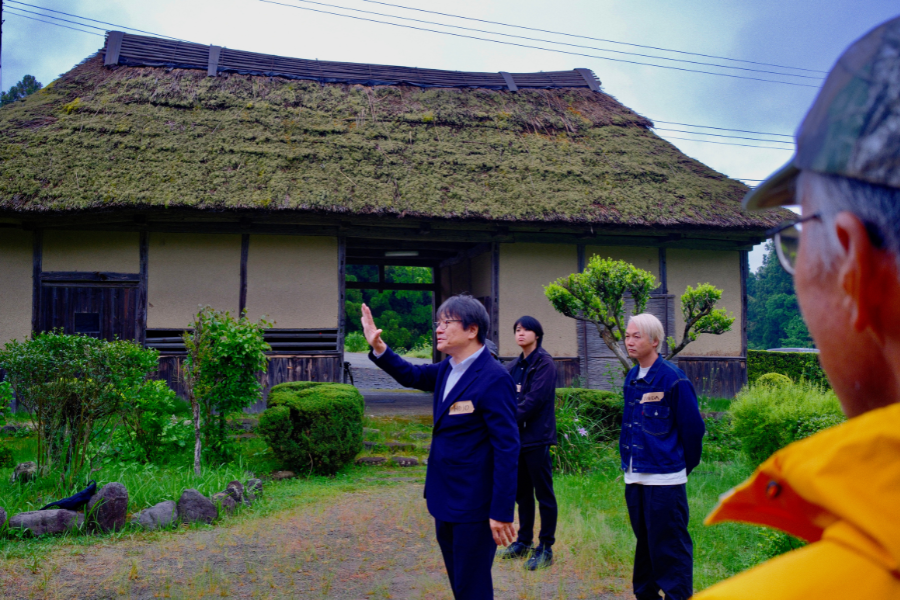 Photo Credits: Massa Takamoto
For generations, the Hojo family served the local community as practitioners of traditional herbal medicine.
To explore this part of the residence’s history, we invited wild-herb expert Harumi Kikuchi to join us. As we walked around the grounds, she showed us which plants were edible and taught us about their characteristics, uses, and preparation methods.
We also played a game: each participant tried to find a plant that they thought might be edible, and Harumi-san told us whether we were right.
Some unexpected plants turned out to be edible, while others that looked promising were not. Children and adults alike became completely absorbed in the activity, and it quickly became one of the liveliest moments of the day.
At the end of the session, we enjoyed a chiffon cake made with wild herbs and a cup of herbal tea, both prepared by Harumi-san.
It felt like a moment in which the history of the Hojo family and the plants still growing on the land came together.
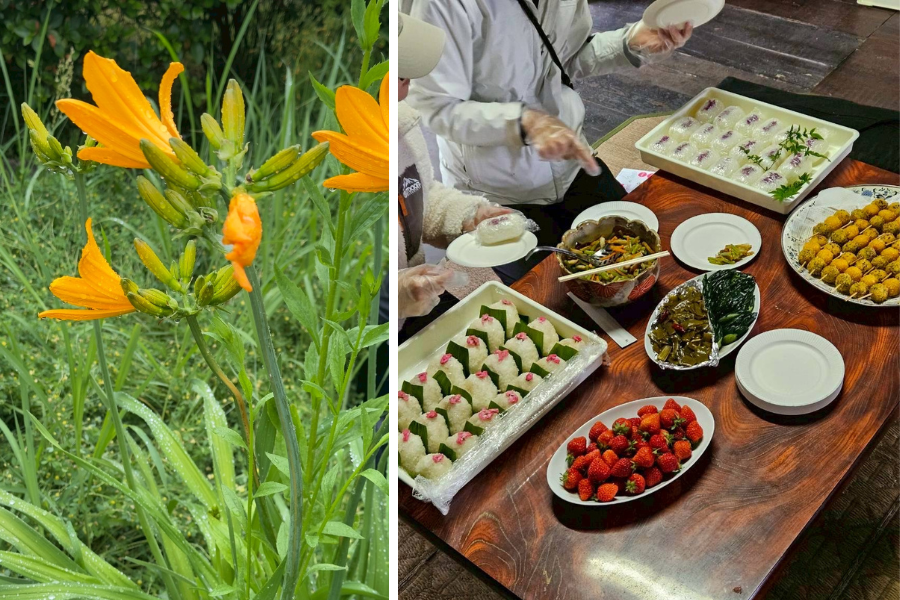 Photo Credits: Wesley Liu (flower photo)
Sleeping in a 350-Year-Old House
In the evening, we shared a meal and spent time getting to know one another. We also visited a local public bathhouse.
Later, those who wished to stay overnight brought sleeping bags and slept in the main house and the traditional gatehouse.
Before going to bed, we gathered on the floor in front of the household shrine in the main house and talked about the future of the Hojo Heritage.
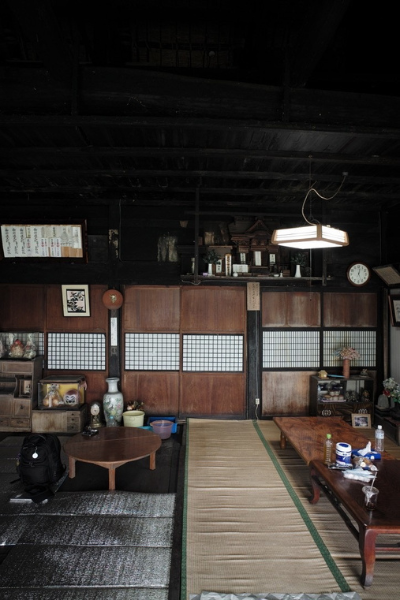
What kind of place should it become?
How can we carry the history of the Hojo family into the future?
What kind of time should visitors be able to spend here?
This may have been one of the last opportunities to stay in the house before restoration work begins.
The Hojo family’s daughter also stayed with us, saying that she might never have another chance to sleep there in its current state.
Sleeping inside a building that has accumulated so many years of history felt slightly surreal. Even so, I slept surprisingly well.
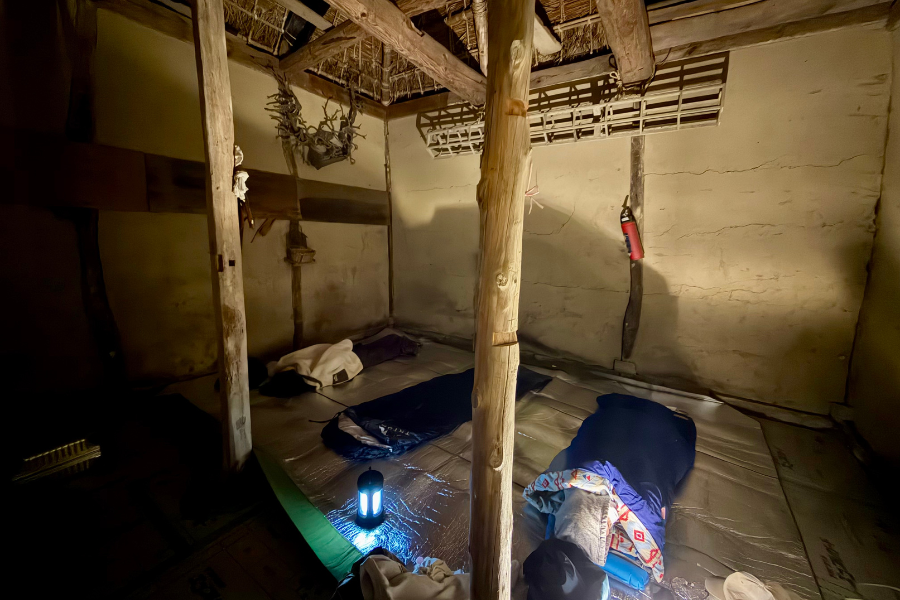
Day Two: When Heavy Rain Changed Our Plans
On the second day, we had planned to plant rice in a nearby paddy owned by the Hojo family.
The idea was to step into the mud in our socks and plant seedlings together, with the hope of returning for a harvest experience in the autumn.
However, unexpectedly heavy rain forced us to change our plans.
Even members of the Hojo family, who have been visiting Sado for many years, said that they had rarely seen rain like it.
Unfortunately, the rice planting had to be cancelled.
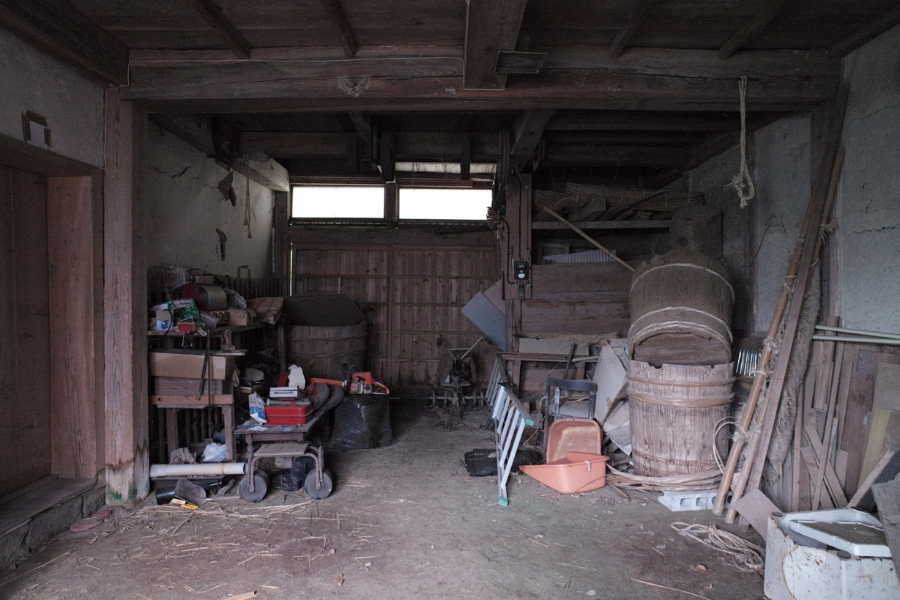
Instead, we took our time looking once again through the storehouses that will be restored and brought into use as part of the project.
Creating New Experiences from What Is Already There
The storehouses still contain furniture, tools, and objects that have been preserved over many years.
Rather than removing everything old and replacing it with something new, we asked ourselves how we could make use of what is already there.
As we walked through the buildings, participants shared ideas with one another.
One suggestion was to recreate the medicine chest once used by Hojo Doeki, a practitioner of traditional herbal medicine.
Guests could select herbs from the medicine chest and create their own original herbal tea. Rather than simply viewing the history of the Hojo family as an exhibit, they would be able to touch, taste, and experience it for themselves.
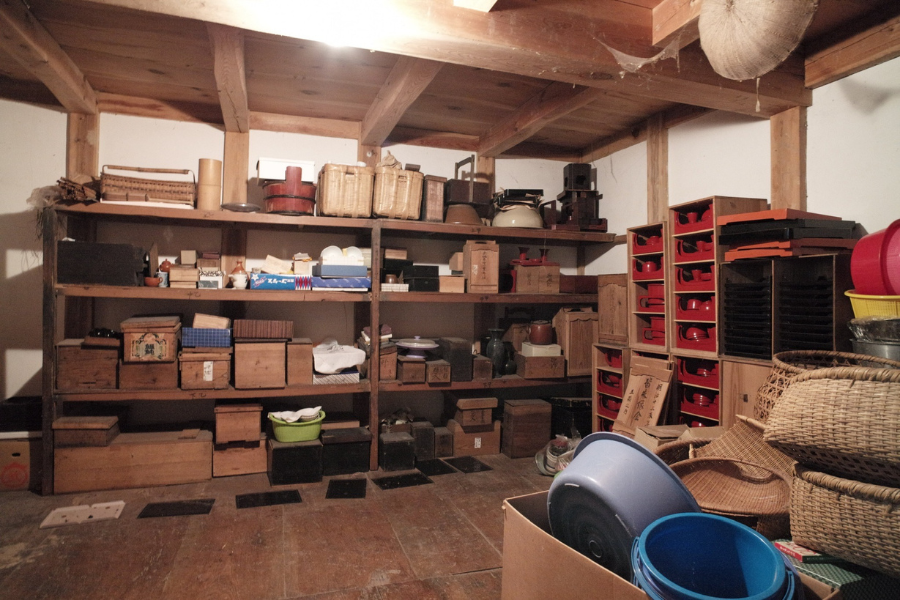
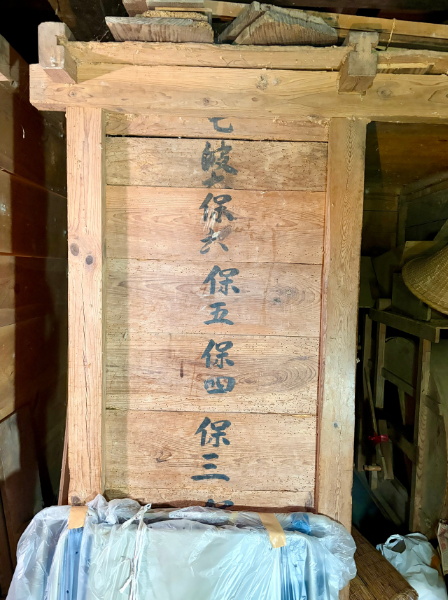
Another idea was to preserve the large storage boxes that remain inside the rice storehouse, rather than removing them.
By making use of the existing structures, we might be able to create a sauna or bathing space inside the storehouse. Herbs gathered from the Hojo family’s land could potentially be incorporated into the sauna experience as well.
As we walked around the buildings and talked, ideas emerged that would never have come from looking at plans and documents alone.
From “Renovation” to “Repair”
As we explored the main house and the storehouses, we repeatedly heard one request from the co-owners:
“Please do not make everything too new and polished. We want you to preserve as much as possible of what is already here.”
The Hojo Heritage retains not only the buildings themselves, but also furniture, tools, storage spaces, and traces of daily life.
As you walk through the rooms, you can imagine where people ate, where they stored their belongings, and how they went about their daily routines. The way the Hojo family lived here over the centuries remains visible.
Of course, the property will need appropriate facilities to operate as an accommodation, with careful consideration given to safety and comfort.
At the same time, if the buildings are modernized too extensively, the layers of time and the memories of the Hojo family’s life here may become harder to see.
In response to the comments from the co-owners, Ishida-san from SIA, the architect working on the project, said something that stayed with us:
“Let’s not call this a renovation. Let’s call it a repair.”
Rather than dramatically transforming the property, the goal is to look carefully at what the Hojo Heritage already holds, make necessary repairs, and pass it on to the next generation.
Through this stayover, the direction of the restoration and revival of the Hojo Heritage gradually began to take shape.
It was disappointing that we could not plant rice as planned. But because of the rain, we were able to spend more time discussing the future of the Hojo Heritage in depth.
Reflections from the Hojo Family
After the two-day stayover, we asked the Hojo family to share their honest impressions.
Because this was the first time they had hosted an event like this, they told us that they had felt some anxiety before the gathering began.
Would they be able to welcome everyone properly?
What kind of discussion could take place inside buildings that were still in need of repair?
The rain forced us to change part of the programme. However, the Hojo family felt that this also gave us more time to exchange ideas carefully and meaningfully.
What left the strongest impression was the realization that the co-owners were not participating solely for financial returns.
They genuinely wanted to help preserve the Hojo Heritage for the future.
How can cultural heritage be brought to life and passed on?
How can the natural environment and history of Sado Island, as well as the Hojo family’s background in traditional herbal medicine, be reflected in the plans for restoration and revival?
The Hojo family told us that their ancestors would surely have been pleased to see so many people gathered in front of the household shrine, speaking seriously about the future of the residence.
Those words stayed with us.
A Reflection from One of the Co-Owners
One of the co-owners who joined the stayover shared the following reflection:
I took the same ferry to Sado Island as Professor Hojo and rode with the Hojo brothers to the house. Along the way, they told me about the endangered toki crested ibis and how local farmers had changed their practices to help bring the birds back. From the very beginning, I felt that the Hojo Heritage was more than a collection of buildings. It is deeply connected to the land, the neighbourhood, and the many living beings around it.
During the wild-herb walk, we wandered around the grounds and picked plants that caught our eye. Harumi-san then told us whether they were edible or poisonous. Everyone laughed when she said, “You can eat this one, but it does not taste very good.” Unfortunately, the plant I chose turned out to be poisonous. For a moment, I felt like a child again, discovering the world with curiosity.
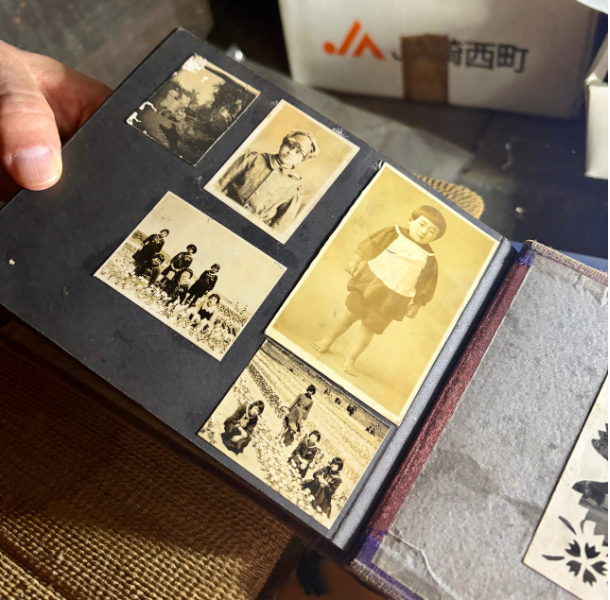
On the second day, we explored the house and the storehouses, looking for inspiration in the things that had been left behind. One of the most memorable moments was seeing members of the Hojo family leaf through old photo albums found on the second floor of the rice storehouse. In the same room, there were several trousseau chests brought into the family by generations of women.
These moments reminded me that the Hojo Heritage holds not only buildings, but also histories, memories, and emotions. I hope this project can bring new people, energy, and resources into the neighbourhood while preserving what is already here.
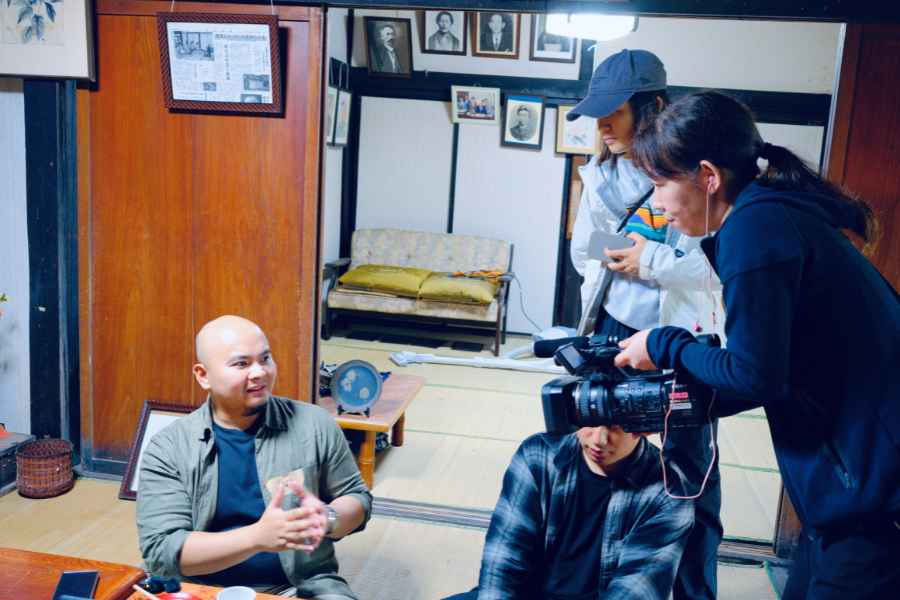 Photo Credits: Massa Takamoto
Looking Ahead
The two days were marked by heavy rain.
Yet precisely because the programme did not go as planned, we had the opportunity to pause inside the buildings and think more deeply about the future of the Hojo Heritage.
Sleeping inside a 350-year-old house.
Discovering the wild herbs growing on the land.
Imagining new uses for the objects preserved in the storehouses.
Gathering in front of the household shrine to talk about the future.
And thinking not only about what we might add, but also about what we should protect.
The stayover generated many ideas. At the same time, it reminded us that the value of the Hojo Heritage does not lie only in the new things we might create.
Our next step is to develop the business plan and update the restoration and revival plan based on the ideas and perspectives shared during the stayover.
Not renovation, but repair.
Together with the co-owners and members of the local community, we will move forward carefully, respecting the many layers of time that the Hojo Heritage has accumulated and preparing to pass this place on to future generations.
We hope you will continue to follow the next chapter of the Hojo Heritage.
=======
The Hojo Heritage project is currently accepting investments until July 22, 2026.
If you would like to become a co-owner and take part in the restoration and revitalization of this historic property, we invite you to learn more through this page.